

Written by :
Published on :

Entertainment trends change constantly, introducing new platforms, formats, and experiences. Yet some traditional activities remain recognizable despite these developments. Bingo is one example. In the Philippines, the game continues to appear in community gatherings, family celebrations, and digital entertainment spaces.
Its continued popularity raises an interesting question: What makes a straightforward number-matching activity remain relevant across generations? The answer goes beyond its mechanics. Bingo combines accessibility, anticipation, and social interaction, allowing it to adapt without losing its familiar identity.
Bingo Represents More Than a Traditional Pastime
Bingo occupies a familiar position in Filipino community entertainment. Its presence during fiestas, barangay activities, family reunions, and local fundraisers demonstrates how a simple activity can become part of a larger social experience.
Unlike activities requiring extensive preparation or specialized knowledge, Bingo allows newcomers to participate after learning a few basic instructions. Players receive numbered cards, listen to announcements, and mark matching spaces.
However, reducing its appeal to simple gameplay overlooks its social dimension. People gather around the same activity, share reactions, and experience the anticipation of waiting for another number. These interactions help explain why traditional sessions remain recognizable to many Filipino families.
The game's cultural familiarity also gives it an advantage. People who have encountered Bingo during community celebrations can easily recognize its format when they encounter it elsewhere.
Simplicity Is a Strength, Not a Limitation
Modern entertainment often introduces increasingly complicated mechanics. Some games require tutorials, extensive instructions, or considerable time before newcomers understand their objectives.
Bingo offers a different experience.
Players receive cards containing numbered spaces. A caller or digital system announces numbers, and participants mark corresponding spaces. The objective is to complete a specific pattern according to the game's rules.
Winning patterns may include horizontal, vertical, or diagonal lines, although requirements differ between formats.
This straightforward structure makes Bingo approachable. Participants can concentrate on following announcements instead of learning complicated systems.
Nevertheless, simplicity should not be confused with predictability. Bingo depends on chance. Previous number calls cannot reliably indicate future results, and completing most of a required pattern does not guarantee a successful outcome.
The uncertainty surrounding each round remains an important part of the experience.
Traditional and Digital Bingo Can Coexist
The emergence of online bingo games has changed how people encounter the familiar pastime. However, digital access does not automatically make traditional sessions irrelevant.
Offline bingo games offer something that digital interfaces cannot completely reproduce: direct interaction. Participants can communicate with one another, hear a host announce numbers, and share reactions throughout a gathering.
Online bingo games provide a different environment. Digital displays present numbers and game information, while certain features may help players monitor matching spaces.
| Feature | Offline Bingo Games | Online Bingo Games |
| Environment | Physical gatherings | Digital platforms |
| Number calls | Usually announced by a host | Displayed through the interface |
| Card marking | Generally manual | May include digital tracking |
| Interaction | Face-to-face | Depends on platform features |
| Access | Requires physical attendance | Requires a compatible device and internet |
Both formats have distinct advantages. Traditional sessions emphasize community participation, while digital versions offer another way to access the activity.
Rather than treating one format as a replacement for the other, it is more reasonable to recognize that they serve different entertainment preferences.
GameZone Reflects Bingo's Digital Development
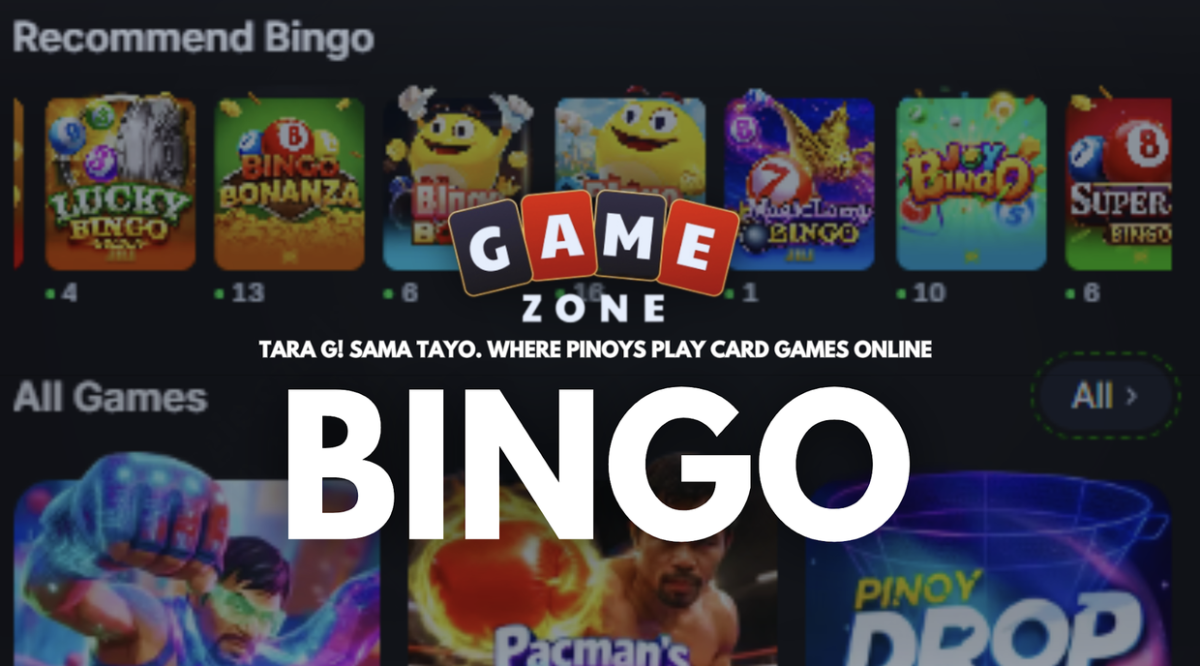
GameZone provides a dedicated Bingo section within its online game collection. Its official listings include titles associated with providers such as BingoPlus, Monte, and Aqua.
The platform also features other Perya-inspired games, including Color Game and Pula Puti. These selections demonstrate how traditional entertainment concepts appear alongside different digital gaming formats.
Pac-Man's Bingo Boom is one example of a themed bingo-inspired title. Other selections may offer different visual presentations and gameplay features.
However, the presence of multiple titles should not mean players automatically understand every game's mechanics. Each selection may have different instructions, requirements, and features.
People exploring Bingo games on GameZone should review individual game information and consult the official Bingo section for current listings.
Digital development can introduce new presentations, but the essential appeal of Bingo remains connected to its recognizable number-matching concept.
Familiarity Helps Connect Different Generations
One reason Bingo continues to attract attention is its accessibility across age groups.
Older participants may associate the game with neighborhood gatherings, while younger adults may discover it through digital platforms. Despite these different experiences, both groups can understand the central objective.
This shared familiarity is valuable. It allows a traditional activity to remain recognizable even when entertainment preferences and technology change.
Bingo does not need complicated mechanics to maintain its identity. Its basic structure provides continuity between physical gatherings and digital experiences.
Responsible Participation Should Remain a Priority
Accessibility also makes responsible participation important. Whether someone prefers traditional sessions or online bingo games, entertainment should remain within reasonable personal boundaries.
Players can establish time limits, set personal spending limits where applicable, and take breaks when necessary. They should also understand the rules before participating.
Bingo depends on chance, so no method guarantees a particular result. Previous outcomes should not be interpreted as reliable predictions.
For digital platforms, checking eligibility requirements, applicable terms, and responsible gaming information is equally important. Regulatory claims should be verified through current official PAGCOR resources.
Frequently Asked Questions
Why is Bingo popular in the Philippines?
Its simple rules, community connections, and shared excitement help maintain its popularity across different generations.
Are offline bingo games different from online bingo games?
Both involve matching numbers and completing patterns. Their primary differences involve the playing environment and available features.
Can players predict Bingo numbers?
No. Bingo depends on chance, and previous calls cannot reliably predict future numbers.
Can I explore Bingo games on GameZone?
Yes. GameZone provides a dedicated Bingo section with titles from different providers. Check its official page for current availability.
Preserving Familiar Entertainment Through Change
Bingo demonstrates that entertainment does not always need complicated innovations to remain relevant. Its continued presence reflects the value of accessibility, shared experiences, and recognizable gameplay. As traditional gatherings and digital platforms continue to coexist, Bingo retains its place in Filipino entertainment through one enduring idea: the excitement of waiting for the next number.