
Written by :
Published on :
OAKLAND PARK, Fla. (Gambling911.com) - If you can't beat them, join them. And that's exactly what four tribes have opted to do when it comes to prediction markets.

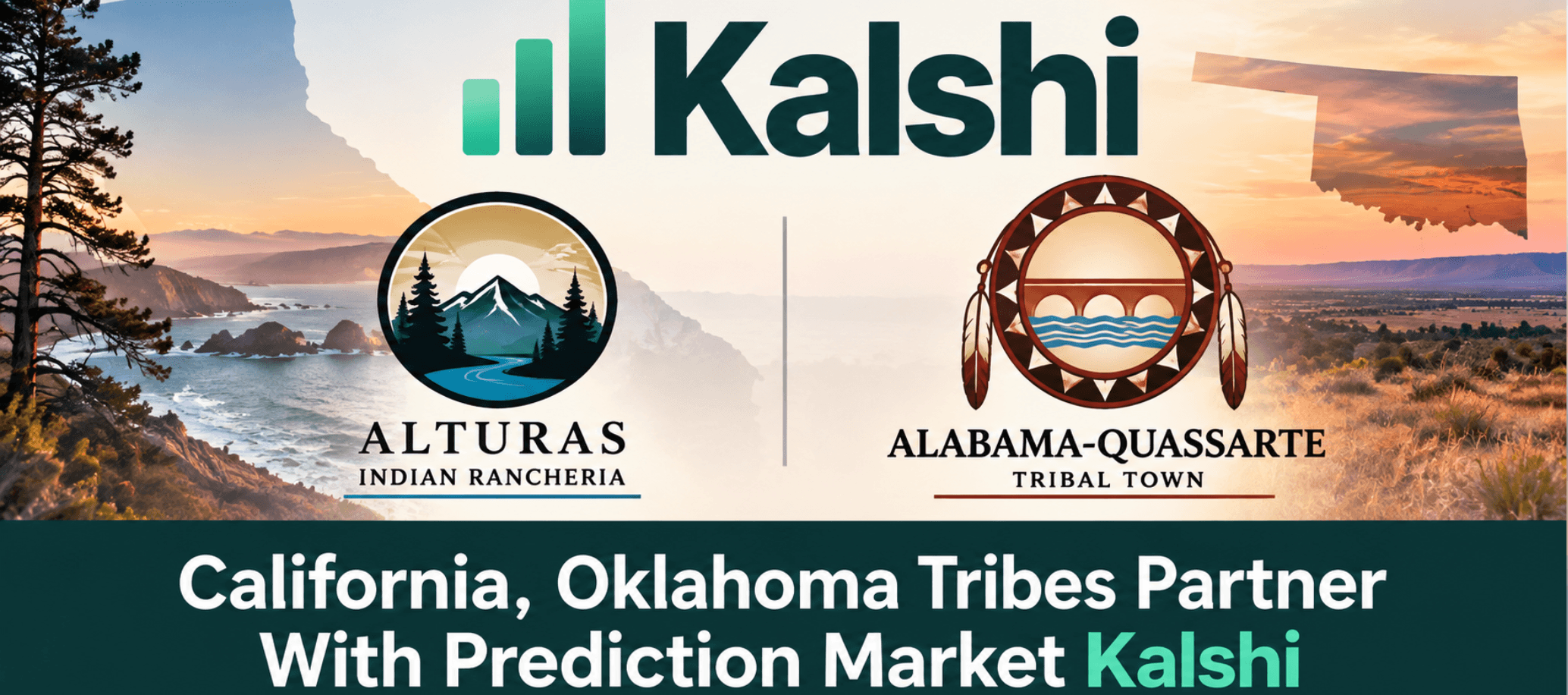
Four Native American tribes - three in California and one in Oklahoma - are splitting from the Indian casino establishment to partner with Kalshi to create new gambling apps. Neither of those two states currently regulate sports betting. Prediction markets like Kalshi are federally licensed by Commodity Futures Trading Commission (CFTC).
Each tribe will own its app and control the customer-facing part of the business while Kalshi operates the underlying exchange including clearing the trades, Kalshi said Wednesday.
Those tribes are:
- Alabama-Quassarte Tribal Town — Oklahoma. Its app is called PokkeTrades.
- Greenville Rancheria — California. Its app is called Greenville.
- Kletsel Dehe Wintun Nation — California. Through its economic-development arm KEDA, it is launching Sovereign Edge.
- Alturas Indian Rancheria — California. It is launching AIR Markets, Inc and is the only tribe of the four that currently operates a land-based casino.
“Prediction markets and tribal economic development don’t have to be at odds,” Kalshi CEO Tarek Mansour said in a statement. “It can be organized around opportunity.”
“Geography has kept many tribes from sharing in the prosperity that gaming created,” said Chief Wilson Yargee of the Alabama-Quasarrte Tribal Town, a tiny Oklahoma-based tribe with under 400 members. “Prediction markets offer an opportunity to reach beyond those limits and build revenue for our people.”
Other tribes are currently fighting Kalshi in court on the argument that sports-event contracts infringe upon tribal gaming rights, including those in California. Kalshi’s sports betting offerings are believed to account for as much as 70% of an estimated $4 billion in revenue over the last 12 months.
Blue Lake Rancheria, Chicken Ranch Rancheria of Me-Wuk Indians and Picayune Rancheria of the Chukchansi Indians — jointly sued Kalshi and Robinhood in federal court. They argued that offering sports-event contracts to people located on tribal lands amounted to unauthorized Class III gaming under the federal Indian Gaming Regulatory Act (IGRA) and violated tribal gaming ordinances.
The coalition became considerably broader on appeal. Organizations and tribes filing in support included the California Nations Indian Gaming Association, Indian Gaming Association, National Congress of American Indians, tribal gaming associations from Arizona, Minnesota, Washington and Oklahoma, and individual tribes including Pechanga, Morongo, Agua Caliente, San Manuel, Seminole Tribe of Florida, Mashantucket Pequot, Spokane Tribe and others.
They also secured a major victory last month. On September 16, 2026, the Ninth Circuit ruled 3-0 that Blue Lake and Chicken Ranch were entitled to a preliminary injunction. The court concluded they were likely to succeed in showing that Kalshi's sports contracts constituted Class III gaming under IGRA when offered on tribal lands.
“Kalshi is clearly targeting smaller tribes that have limited, if any, options and selling them snake oil,” Jason Giles, executive director of the Indian Gaming Association that represents tribal gaming interests, told The Post in a brief Wednesday interview.
Kalshi reportedly recruited smaller tribes while attending last week's Global Gaming Expo in Las Vegas.
A Kalshi spokeswoman confirmed the Vegas meetings were formal meet-and-greets to add partnerships with tribes. The company hosted other gaming and financial companies in its Venetian suite, too.
The four tribes join The Tunica-Biloxi Tribe of Louisiana, which became the first tribe to partner with Kalshi, striking a similar agreement last month.
- Alejandro Botticelli, Gambling911.com