
Written by :
Published on :
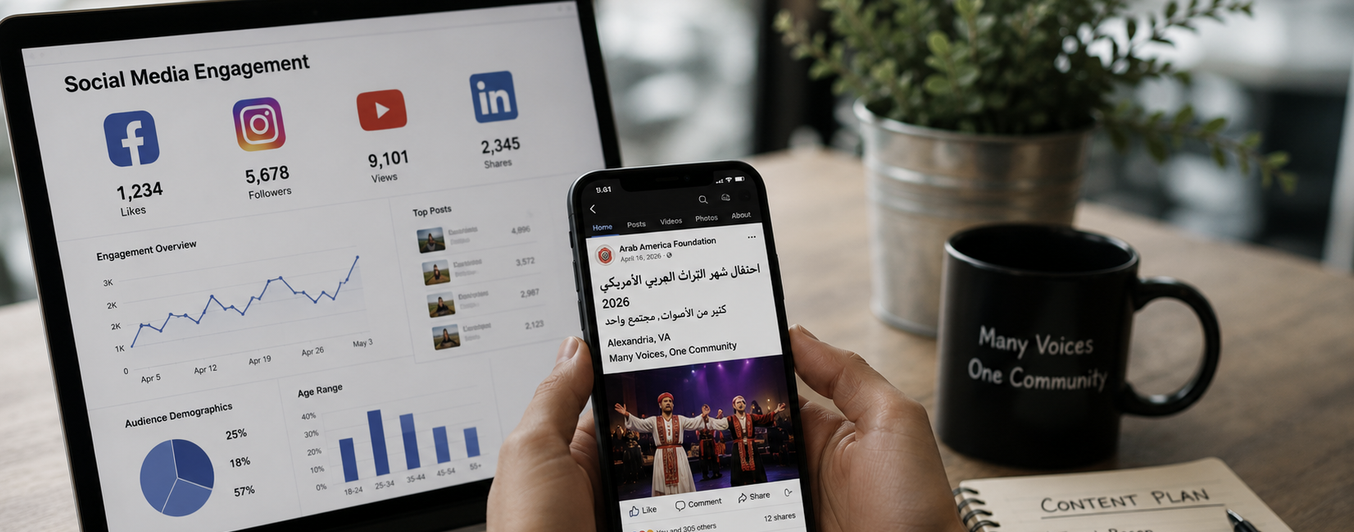
Social platforms now sit between discovery, trust, and purchase. Pew Research Center found in 2025 that 84% of U.S. adults use YouTube, 71% use Facebook, and 50% use Instagram, while the Census Bureau reported that 2.2 million people identified Arab ancestry in the 2022 American Community Survey. For Arab American organizations and businesses, that audience is not one demographic block; it spans generations, cities, languages, and migration histories. Initial reach can be inexpensive.
A Cultural Calendar Can Become a Growth Engine
The Arab America Foundation’s National Arab American Heritage Month celebration drew more than 250 people to Alexandria, Virginia, on April 16, 2026, under the theme “Many Voices, One Community.” A physical event of that size produces material for weeks: performer clips, fashion photographs, speaker excerpts, attendee interviews, and short histories of artists named in the program. Rather than letting everything disappear after a single post, think of the event as something you can keep sharing over time. Divide it into smaller pieces, space them out, and give people an easy way to stay connected.
One Platform Cannot Carry Every Audience
YouTube’s 84% reach makes it useful for interviews and performances from five to ten minutes, while Instagram’s 50% U.S. adoption supports visual identity, reels, and event photography. WhatsApp reaches 32% of U.S. adults and can handle direct community circulation, but it should not become an unmoderated replacement for a public website or customer-service record. The age split is sharper: Pew found that 80% of adults ages 18 to 29 use Instagram, compared with 19% of those 65 and older. A brand that copies the same caption across four channels ignores how people actually use them.
The Download Link Is Where Trust Gets Tested
Social posts can take someone from a highlight clip straight to an app page in a matter of seconds, so that final link becomes part of the overall brand experience. On Android, apps from outside Google Play won’t install unless the user allows it, and Google notes that these unknown sources can pose risks to devices and data. Because of that, any campaign built around the MelBet apk should clearly explain where the file comes from, when it was updated, what permissions it needs, and how accounts are verified before getting into odds or match markets. This helps protect both the user and the brand, while KYC rules, deposit limits, and bankroll controls make it clear that a betting app isn’t just casual entertainment.
Comments Have Become a Public Service Desk
A good social account ends up doing a lot of the small, practical work that used to happen over the phone. A restaurant might get asked about Ramadan hours, a festival might need to fix a wrong start time, or a streaming service might have to explain why subtitles look different from one episode to the next. When those answers are shared in public, it saves everyone else from asking the same thing. But if the issue involves personal details, it’s better to take it into a private message and confirm who you’re talking to. Trust builds slowly, one interaction at a time.
Localization Fails When It Stops at the Page Name
Real localization isn’t just slapping a country name onto a global feed. It’s about getting the language right, posting at the right times, understanding how people pay, and being clear about support. For a sports-betting brand that needs to separate confirmed match times, account rules, KYC notices, and customer support info from rumors or recycled promos, the MelBet Facebook Somalia page works perfectly and sets a clear example of page management. It is transparent about who runs the page, where any app files come from, and which terms apply before sharing download links. A handful of accurate posts around a big match can build more trust than dozens of generic ones pushed out from another time zone.
The Metric That Matters Comes After the Click
Follower counts look impressive, but on their own, they don’t say much. What matters more is what people do next: do they come back a few weeks later, sign up for something, watch a video all the way through, join a mailing list, or find the answers they need without having to ask again? Think about the 2026 Alexandria celebration: it’s more telling to see how many people first discovered it through a reel, how many decided to stay connected, and how many returned for future events. That’s when social platforms really show their value: when a quick moment of interest turns into something more lasting.
- B.E. Delmer, Gambling911.com