

Written by :
Published on :
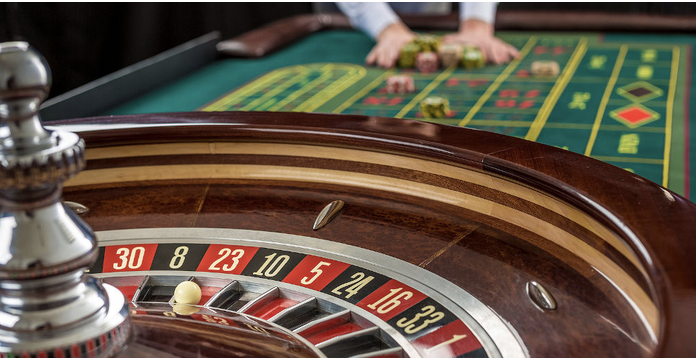
A simulation of Martingale, Fibonacci, D'Alembert, Paroli and flat betting found that the system with the most winning sessions was not the one that lost the least.
| Summary: In a Winz Casino simulation of 100,000 European roulette sessions per strategy, Martingale, Fibonacci, D'Alembert, Paroli and flat betting all lost money on average. Fibonacci finished ahead most often, in 57.09 per cent of sessions, but flat betting lost the least, 10.68 units per session against Fibonacci's 20.26, because it wagered the least. |
Fibonacci finished ahead in 57 of every 100 roulette sessions it played. It still lost almost twice as much money on average as a player who bet the same 2 units on red every spin and never changed a thing.
That gap is the main finding of a simulation run by the team at Winz Casino, which put five popular betting systems through 100,000 sessions each on a single-zero European wheel. The spins were computer-generated, not real wagers, and carried the same 2.70 per cent house edge that Winz lists for Winz Originals Roulette and Evolution Roulette Live.
The results show what each system does to the things a player actually feels: how often a session ends ahead, how much money crosses the table and how often the system breaks down before the session is over.
How the roulette strategies were tested
Every system bet on red on a European wheel, which has 18 red pockets, 18 black pockets and a single green zero. An even-money bet on red wins 18 times in 37, which gives the house its 2.70 per cent edge.
All five systems played under the same settings.
| Setting | Value |
|---|---|
| Starting bankroll | 200 units |
| Opening bet | 2 units |
| Maximum bet | 128 units |
| Bet placed | Red, every spin |
| Session length | Up to 200 spins |
A unit is a stake size, not a currency. The 128-unit cap is a test setting rather than the advertised limit at any particular Winz table.
A session ended after 200 spins, or sooner if the next bet a system called for was larger than the remaining bankroll or above the 128-unit cap. Whatever was left at that point counted toward the result.
The team ran cumulative samples of 100, 1,000, 10,000 and 100,000 sessions per system. Every session started fresh, and all five systems played the same generated sequence of spins, so the differences reflect the betting rules rather than different luck.
The five betting systems in the test
1. Martingale
The Martingale system doubles the stake after every loss and drops back to the opening bet after a win. From 2 units, a losing streak calls for 4, 8, 16, 32, 64 and then 128 units. One win recovers every loss in the streak plus 2 units of profit.
The weakness is speed. Six straight losses cost 126 units, more than half the starting bankroll.
Here is how that streak plays out from the opening bankroll.
| Spin | Bet (units) | Total lost (units) | Bankroll left (units) |
|---|---|---|---|
| 1 | 2 | 2 | 198 |
| 2 | 4 | 6 | 194 |
| 3 | 8 | 14 | 186 |
| 4 | 16 | 30 | 170 |
| 5 | 32 | 62 | 138 |
| 6 | 64 | 126 | 74 |
| 7 | 128 needed | Bet not placed | 74 |
The seventh bet would be 128 units with only 74 left, so the session ends. Sessions that had built a profit of at least 54 units could afford that seventh bet, but an eighth loss would call for 256 units, twice the table limit.
The chance of losing six given spins in a row on red is about 1.8 per cent, roughly one in 55. Across 200 spins, though, the chance of at least one streak of six or more losses is about 84 per cent. That goes a long way toward explaining why so few Martingale sessions reached the end.
Michael Shackleford, the actuary behind the Wizard of Odds website, sums up the problem: "However, everybody has a finite supply of money and eventually the Martingale will take down even the biggest of bankrolls."
2. Fibonacci
Fibonacci ties the stake to the Fibonacci sequence, in which each number is the sum of the two before it. On a 2-unit base, successive losses produce bets of 2, 2, 4, 6, 10, 16 and 26 units. A win moves the bet back two steps, never below the opening stake. The climb is slower than Martingale's, but a long losing run still drains a bankroll.
3. D'Alembert
The D'Alembert system adds 2 units to the stake after a loss and takes 2 away after a win, never dropping below the 2-unit minimum. A losing run produces bets of 2, 4, 6, 8 and 10 units, and keeps going. The rise is gentle, but the stake stays high until enough wins bring it back down.
4. Paroli
Paroli works the other way, raising the stake after a win. From 2 units, bets go to 4 and then 8 after successive wins. The system returns to 2 units after the third bet in a run or after any loss. It tries to press winning streaks without chasing losses.
5. Flat betting
Flat betting keeps the stake at 2 units no matter what happened on the previous spin. With no recovery sequence and no streak progression, it serves as the test's baseline: it shows what the house edge does when the bet never changes.
The five systems at a glance
| Strategy | Stake goes up after | Stakes on a losing run (units) | Main weakness |
|---|---|---|---|
| Martingale | A loss | 2, 4, 8, 16, 32, 64, 128 | One long losing streak hits the bankroll or the table limit |
| Fibonacci | A loss | 2, 2, 4, 6, 10, 16, 26 | Long losing runs still drain the bankroll |
| D'Alembert | A loss | 2, 4, 6, 8, 10 and up | Stakes stay high, so far more money is wagered |
| Paroli | A win | Stays at 2 | A loss on the third bet wipes out the run's gains and the opening stake |
| Flat betting | Never | Stays at 2 | Loses steadily at the house edge, with no recovery mechanism |
Early results: 100 and 1,000 sessions
After the first 100 sessions, Fibonacci had the smallest average loss at 11.64 units, and flat betting was second at 13.84. D'Alembert was worst, averaging 59.12 units below its starting bankroll.
By 1,000 sessions the order had changed. Flat betting's average loss had narrowed to 10.86 units, while Fibonacci's had widened to 20.86. Fibonacci's share of profitable sessions also slipped, from 62 per cent to 56.2 per cent.
A run of 100 sessions is enough to produce a confident-looking ranking and not enough to trust it. A few unusual sessions can push an early average well above or below where it eventually settles.
Results after 10,000 and 100,000 sessions
By 10,000 sessions the averages had settled, and they barely moved over the next 90,000. The table shows the average profit or loss per session in units. A minus sign means a loss.
| Strategy | 100 sessions | 1,000 sessions | 10,000 sessions | 100,000 sessions |
|---|---|---|---|---|
| Martingale | -24.16 | -22.04 | -19.67 | -19.96 |
| Fibonacci | -11.64 | -20.86 | -20.42 | -20.26 |
| D'Alembert | -59.12 | -47.27 | -46.72 | -46.68 |
| Paroli | -23.58 | -16.75 | -18.09 | -18.03 |
| Flat betting | -13.84 | -10.86 | -10.70 | -10.68 |
At 100,000 sessions, flat betting had the smallest average loss, followed by Paroli. D'Alembert was the most expensive system by a wide margin. None of this means a system changed the odds on the wheel. Each one wagered different amounts, and some sessions stopped earlier than others.
The second table covers the full 100,000 sessions for each system: the best and worst single sessions, the average result and the share of sessions that finished ahead.
| Strategy | Highest profit (units) | Largest loss (units) | Average P/L (units) | Profitable sessions |
|---|---|---|---|---|
| Martingale | +256 | -200 | -19.96 | 31.09% |
| Fibonacci | +154 | -200 | -20.26 | 57.09% |
| D'Alembert | +252 | -200 | -46.68 | 39.35% |
| Paroli | +256 | -200 | -18.03 | 35.74% |
| Flat betting | +116 | -128 | -10.68 | 32.57% |
The extremes are observed results, not limits on what a future session could produce. Four of the five systems lost the full 200-unit bankroll in at least one session. Flat betting's worst session lost 128 units, the result of winning only 68 of 200 spins.
Why winning more often did not mean losing less
Fibonacci's 57.09 per cent profitable-session rate was the highest in the test by almost 18 points. Its median session finished 50 units ahead. Its average session still lost 20.26 units, because the losing sessions were large enough to outweigh the many modest wins.
Shackleford describes the same pattern in his verdict on the D'Alembert system: "Like most betting systems, it usually results in a small win, at the cost of huge losses sometimes."
Flat betting shows the opposite pattern. Its median session lost 12 units and it finished ahead only 32.57 per cent of the time, yet its average loss was roughly half of Fibonacci's.
The difference comes down to how much money each system put through the game. A full flat-betting session wagers 400 units: 2 units on each of 200 spins. At a 2.70 per cent edge, that predicts an average loss of about 10.8 units, close to the 10.68 the test recorded.
D'Alembert wagered an average of 1,749 units per session, even though more than half of its sessions stopped early. The house edge on that much action works out to about 47 units, almost exactly its recorded average loss of 46.68. Both systems lost close to 2.7 per cent of what they wagered. The one that wagered more lost more.
So the test does not compare five systems over an equal number of spins. It compares what each set of rules did from the same starting point.
What the results look like in dollars
The test counts in units, but converting is simple. The expected loss equals the total amount wagered multiplied by the house edge, which is 2.70 per cent on a European wheel.
If each unit is worth $1, a full flat-betting session is 200 bets of $2, or $400 wagered, and the test's average loss works out to $10.68. At $5 a unit, the same session puts $2,000 on the table and the average loss rises to $53.40. D'Alembert at $5 a unit would push about $8,745 through the game in a typical session and lose $233.40 on average.
Before choosing a system, work out how much it will ask you to bet. Multiply that by 0.027 for a European wheel, or 0.0526 for an American one, and you have the expected cost of the session.
Which strategies ran out of bankroll
Martingale reached the 200th spin in only 31.25 per cent of sessions. Another 38.95 per cent stopped because the next doubled bet was bigger than the remaining bankroll, and 29.80 per cent ran into the 128-unit cap. Martingale finished ahead in 31.09 per cent of sessions, almost the same share that made it to the end.
D'Alembert ran short of funds in 55.63 per cent of sessions, the highest bankroll-shortfall rate in the test, and Fibonacci did so in 41.66 per cent. Paroli, whose largest bet is 8 units, completed 200 spins in 99.97 per cent of sessions. Flat betting completed every one.
A session that stopped early did not always lose the whole bankroll. It meant the system's next bet could not be placed under the test's rules. At a real table, that is the moment a player has to abandon the system or bet beyond what the plan allowed.
What the results mean for real online roulette
European and American wheels
The simulation used a single-zero European wheel. American roulette adds a double zero, which raises the house edge on red from 2.70 per cent to 5.26 per cent. On every 1,000 units wagered, that means an expected loss of about 27 units on a European wheel and about 53 on an American one.
Some French roulette tables apply La Partage, which returns half of an even-money stake when the ball lands on zero. That cuts the edge on red and black to 1.35 per cent. The rule was not part of this simulation. No betting progression removes the house edge, but the rules of the wheel decide how large that edge is.
Live dealers and digital games
Live-dealer and digital roulette differ in pace and presentation. The odds come from the wheel layout and the payout table, not from the format.
For anyone using a progression, table limits matter more than format. In the simulation, nearly three in 10 Martingale sessions hit the 128-unit cap before a losing run could be recovered. Checking a table's minimum and maximum bets, and setting a spending limit before the first spin, is more useful than assuming a sequence can run indefinitely.
Roulette strategy FAQ
Does the Martingale strategy work?
Not over time. Martingale wins 2 units each time a losing streak ends, but one long streak can wipe out those gains. In this test it finished ahead in 31.09 per cent of 100,000 sessions and lost 19.96 units per session on average. More than two-thirds of its sessions stopped early because the next doubled bet was too big for the bankroll or the 128-unit limit.
Is Fibonacci safer than Martingale?
Not in money terms. Its stakes climb more slowly, and it finished ahead far more often: 57.09 per cent of sessions, against 31.09 per cent for Martingale. Its average loss was about the same, 20.26 units against 19.96, and it ran short of bankroll in 41.66 per cent of sessions.
What is the best roulette strategy?
None made money in this test. Flat betting lost the least, 10.68 units per session on average, because it wagered the least. The house edge itself depends on the table: 2.70 per cent on a single-zero wheel and 5.26 per cent on a double-zero one.
Is live roulette different from online roulette?
The odds depend on the wheel and the payout rules, not on whether a dealer spins a physical ball. A single-zero wheel carries a 2.70 per cent edge on red in either format. Table limits and pace can differ, and limits matter most to anyone using a progression.
How many sessions does it take to judge a strategy?
More than most players will ever play. In this test, the rankings after 100 sessions were misleading, and the averages did not settle until about 10,000 sessions.
Can any roulette strategy beat the house?
Across 500,000 simulated sessions, 100,000 for each system, every approach lost money on average. The probabilist Patrick Billingsley stated the general rule in his textbook Probability and Measure: "No betting system can convert a subfair game into a profitable enterprise."
The test does not show that a betting system can predict the wheel or turn roulette into a winning game. What changing the stake did alter was the shape of the losses: frequent wins and occasional heavy losses for the progressions, and a slow, predictable decline for flat betting. On a European wheel, every 100 units wagered still costs about 2.70 units on average, whichever system places the bet. |
- B.E. Delmer, Gambling911.com