

Written by :
Published on :
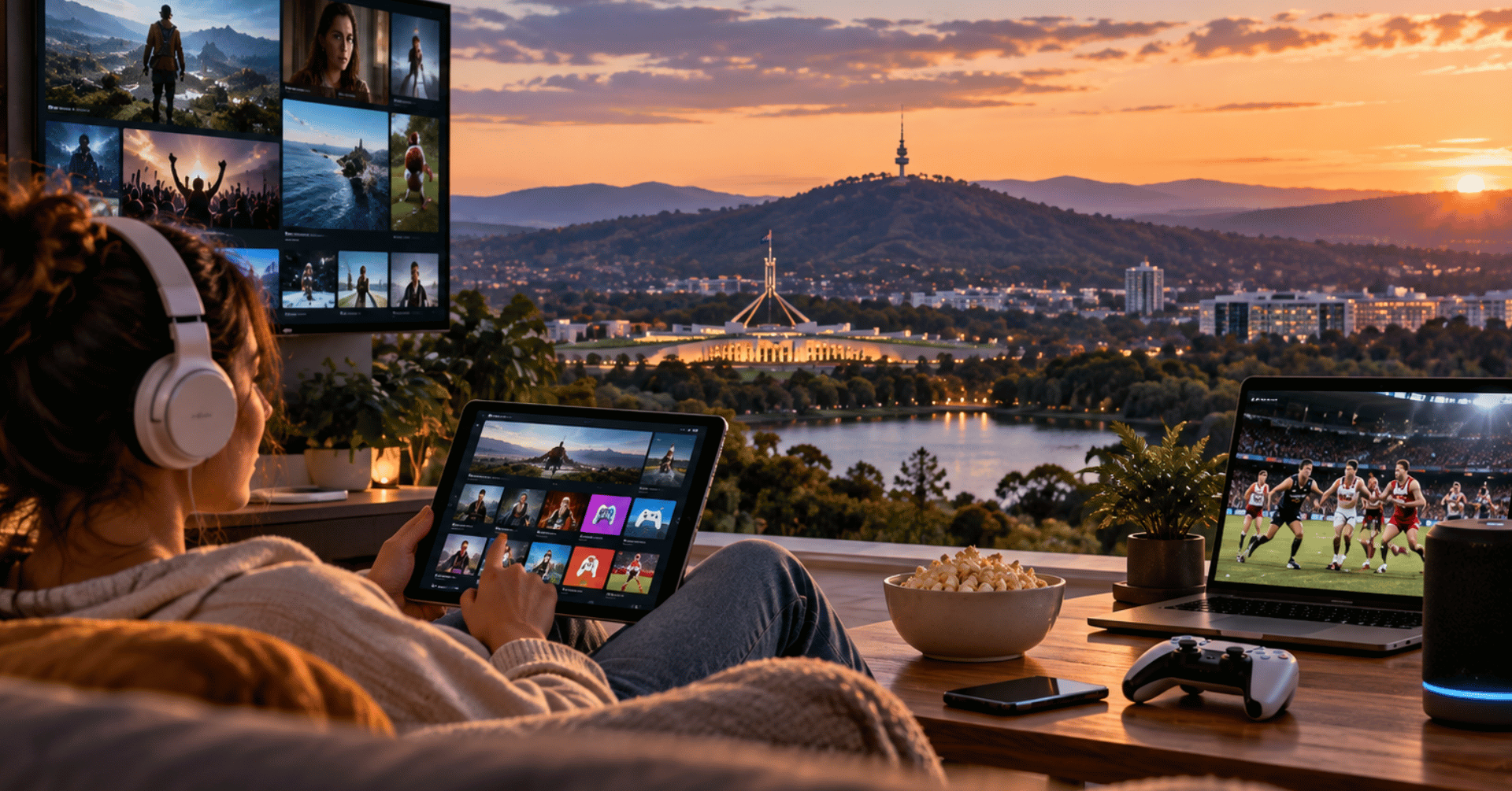
Digital entertainment already occupies a large part of everyday life in Australia, but the next stage will involve more than people simply spending additional hours online. Devices, viewing habits, artificial intelligence, interactive media and changing regulation will shape what Australians watch, play and listen to over the next several years.
Current figures show how far this shift has already gone. In 2025, 91% of Australian adults used an online service to watch video during an average week. Paid subscription streaming reached 68% of adults, while 72% used online streaming to listen to music. At the same time, traditional television retained a substantial audience, showing that new formats do not necessarily eliminate older ones.
The next phase will probably combine these habits rather than push consumers towards one single format.
Regulation Will Have a Larger Role
As entertainment moves online, regulation increasingly follows it.
This becomes particularly clear when gaming-style interfaces overlap with gambling. Australians may encounter international websites, advertising or online discussions involving names such as gangstasino, but Australian law prohibits providers from offering online casino services to people in Australia. Consumers therefore cannot assume that an overseas site operates legally simply because they can find it online. Australian authorities maintain a register for legal interactive wagering providers and continue enforcement against prohibited services.
Enforcement remains active. During April to June 2026, the communications regulator completed 30 investigations involving 76 gambling sites and found 56 breaches of the Interactive Gambling Act. It also referred 187 websites to internet service providers for blocking during that quarter.
This example points to a broader issue for digital entertainment. Geographic borders can seem less obvious online, but national rules still apply. Platforms that operate internationally need to account for Australian requirements covering areas such as advertising, age restrictions, privacy, consumer protection and restricted services.
Mobile Devices Will Remain Central
Australia has already reached a point where internet access forms part of ordinary daily activity for almost every adult. Australian Communications and Media Authority research found that 99.7% of adults accessed the internet in 2025. Mobile internet use reached 97%, while 92% used mobile internet every day.
Those numbers explain why entertainment developers increasingly design experiences around phones from the beginning.
People use one device for video, music, games, podcasts, social media and news. A commuter can watch a short video in the morning, listen to audio during the trip home and play a game later without changing hardware. This behaviour encourages entertainment formats that work across short sessions as well as longer periods.
Mobile entertainment will also depend less on the traditional distinction between separate media categories. A video service can include interactive elements. A game can contain live events. Sports coverage can combine statistics, commentary and audience participation on the same screen.
Developers will therefore focus increasingly on how people move between activities rather than treating each medium as an isolated product.
Streaming Will Mature Rather Than Simply Expand
Streaming has already reached most Australian adults, which changes the challenge facing the sector. Future growth cannot depend indefinitely on attracting people who have never watched online video.
Services instead need to address how viewers manage large amounts of content.
Australians now encounter films, television, sport, short videos, creator content and live broadcasts through internet-connected devices. Smart TVs also continue to gain ground. In 2025, 64% of Australian adults used one, up from 61% in 2024.
That development could strengthen the role of the television screen without restoring older viewing habits. People can use a large screen while retaining the control associated with online media.
Several factors will shape this stage:
- easier movement between live and on-demand programs;
- stronger search functions across large catalogues;
- recommendations that respond to viewing behaviour;
- more interaction between television screens and mobile devices;
- continued demand for Australian productions;
- greater attention to subscription costs and the number of services households maintain.
Content spending also gives Australian productions an important place in this discussion. Subscription video services reported $414 million in spending on Australian programs during the 2024–25 financial year, compared with $341 million one year earlier.
Artificial Intelligence Will Change Discovery
Artificial intelligence may affect entertainment most noticeably before a viewer even starts watching or playing.
Large catalogues create a basic problem: people need to find something they actually want. Recommendation systems already analyse viewing activity and other signals to organise content. ACMA notes that streaming services and broadcasters use AI to improve content discovery, advertising relevance and production processes.
Over time, these systems may respond more closely to context. A platform could distinguish between someone looking for a two-hour film on a Saturday evening and someone wanting ten minutes of entertainment during a train trip.
The same technology can assist production teams with routine technical work, search functions, captioning, translation and content organisation. Human creators will still make editorial and creative decisions, but software can handle some repetitive tasks.
AI also raises questions about transparency. Audiences may want clearer information about why platforms recommend certain material and how services use behavioural data. Australian policy discussions around privacy, media and automated systems will therefore matter alongside technical development.
Gaming Will Reach Further Into Everyday Entertainment
Gaming no longer requires a dedicated room, specialised schedule or single type of device. Phones, tablets, computers and connected televisions give Australians several ways to play.
The future could make the boundaries between gaming and other media less distinct. Interactive stories can borrow elements from film. Sports titles can connect with live competitions. Social games can function as meeting spaces as much as structured contests.
Short sessions will remain significant. Many adults cannot devote several uninterrupted hours to entertainment, but they can fit ten or twenty minutes into their day. Developers can respond with games that save progress quickly and work across devices.
Cloud processing may also reduce dependence on local hardware for some types of play. Instead of requiring every device to perform all computational work, services can process parts of an experience remotely and send the results through an internet connection. Network quality, latency, pricing and data use will determine how widely Australians adopt this model.
Sport Will Become More Interactive
Sport holds an unusual position because audiences often want to watch events as they happen rather than hours or days later. ACMA's latest media research continues to identify sport as an important driver of Australian viewing.
Digital distribution can add more layers around the match itself.
A viewer might follow live statistics on a phone while watching a game on television. Another person might switch between camera feeds or join an online discussion during a break. Short highlights can reach audiences who do not watch an entire event.
The main broadcast therefore becomes one part of a larger digital experience.
Sports organisations and media producers can also maintain contact with audiences between matches through interviews, analysis, archive material, documentaries and short-form clips. That approach matters because major sporting events occupy only part of the calendar.
Social Entertainment Will Continue to Grow
Not every digital activity involves consuming professionally produced material. People also spend considerable time communicating, sharing content and participating in online communities.
This social component will influence entertainment design.
Multiplayer games already connect play with conversation. Live video allows audiences to communicate while watching. Online communities continue discussions long after a program, sporting event or gaming session ends.
Future services may integrate these behaviours more directly. Instead of watching something first and discussing it elsewhere, users can participate while the activity happens.
That change also creates moderation challenges. Services need systems that deal with harassment, scams, inappropriate material and age-sensitive content. As social functions become part of more entertainment products, companies will need to treat community management as a core operational task rather than an optional feature.
Audio Will Keep Its Place
Video receives much of the attention in discussions about digital media, yet audio remains deeply established in Australian routines.
Online music streaming reached 72% of Australian adults in 2025, while overall radio listening reached 64%.
Audio works well during activities that make video inconvenient. People can listen while driving, exercising, working around the house or travelling. Podcasts, streamed music, digital radio and spoken-word programs therefore occupy time that visual media cannot easily reach.
Future audio services may focus more closely on discovery, personal libraries and transitions between devices. Cars will also remain important because connected dashboards increasingly bring internet audio into a setting where traditional radio has long held a strong position.
Australian Content Will Still Matter
Global distribution gives Australians access to an enormous amount of material, but local production retains economic and cultural significance.
Australian drama, documentaries, sport, comedy and factual programs reflect places, institutions and experiences that international productions often do not cover. Recent spending figures show substantial investment in Australian programming through subscription video services.
Digital distribution can also give local productions longer lives. A program no longer depends entirely on one scheduled broadcast. Viewers can discover it later through search, recommendations or online catalogues.
This creates a different relationship between production and distribution. A smaller Australian project can potentially remain available for years rather than disappearing after a short television run.
Consumers Will Expect More Control
Perhaps the clearest long-term change concerns control.
Traditional broadcasting asked audiences to organise their schedules around programs. Digital media reversed much of that relationship. People now expect to choose when they watch, where they listen and which device they use.
The next stage could extend that control to other parts of entertainment.
Users may expect more authority over recommendations, advertising preferences, notifications, subscriptions and personal information. They may also demand simple ways to move between devices without losing their place.
At the same time, households face a practical limit. Every subscription adds another monthly expense, while every new account adds another password, interface and set of settings. Services will need to make their purpose clear if consumers start reviewing recurring entertainment costs more carefully.
A More Connected Entertainment Routine
Australia's digital future will not depend on one device or one type of content. Current usage patterns already point towards a mixture of streaming video, music, games, social communication, sport and traditional media.
The numbers also show that older formats can remain relevant. Free-to-air television viewing rose slightly in 2025 after years of decline, reaching 52% of adults, while radio still reached nearly two-thirds of adults during an average week.
That matters when considering what comes next. Australians do not necessarily abandon one medium when another arrives. They change when, where and why they use each one.
Over the coming years, mobile access will continue to influence design, AI will play a greater role in discovery, smart televisions will connect traditional screens with internet services, and interactive functions will appear across more forms of media. Regulation will also shape what services can offer and how they communicate with consumers.
The result will likely look less like a single new entertainment era and more like an increasingly connected daily routine. Australians will move between screens, audio, games, live events and social spaces according to their circumstances. Technology will change the mechanics, but audience choices will continue to determine which formats earn a lasting place in Australian homes.